
Automotive & Components
Component handlingAssemblyProcess automationInspectionEnd-of-line
Automation for component production and assembly where cycle time, repeatability, process control and model variation must be managed consistently.
Equipment is developed around the product, manufacturing process, operating environment and production requirements of the application.
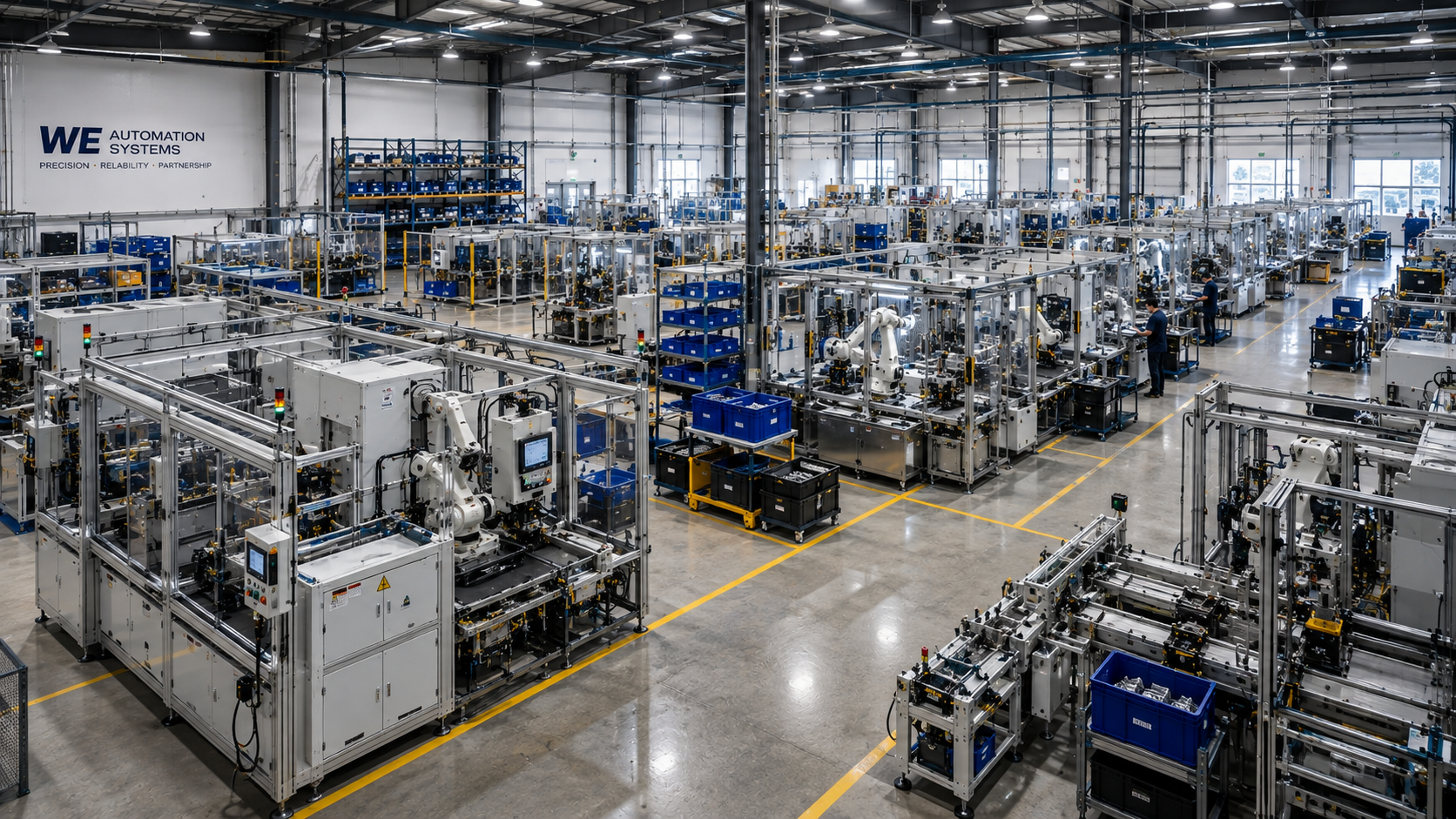
Automation for component production and assembly where cycle time, repeatability, process control and model variation must be managed consistently.
Precision automation for products requiring controlled handling, accurate placement, defined assembly steps and reliable verification.
Production equipment for manufacturing applications requiring controlled handling, repeatable operations, inspection and process verification.
Automation for diagnostic and laboratory products involving component feeding, assembly, handling, inspection, testing and downstream processing.
Application-specific machinery for components and assemblies requiring controlled positioning, measurement, handling or integrated process operations.
Custom production equipment for industrial components, subassemblies and manufacturing operations that require application-specific machinery.
Automation for assembly, product handling, inspection, packing and end-of-line operations where production efficiency and consistency are important.
Automation for product transfer, packing, labelling, case handling, palletising and integration with upstream or downstream production equipment.
Automation is typically considered when a production process requires greater output, consistency, control, traceability or reduced dependence on repetitive manual operations.
Increase production output while maintaining control of the process.
Reduce variation across defined production and assembly operations.
Integrate inspection or verification into the production process where required.
Automate repetitive, difficult or production-critical manual tasks.
Accommodate product variation and changing production requirements.
Capture and associate production information where process accountability is required.
The sectors above are representative rather than exhaustive. A manufacturing application can be reviewed where custom machinery, robotics, handling, inspection, testing or system integration may provide an appropriate solution.