
01Define
Establish the manufacturing requirement
Define the product, process, required output, operating conditions, interfaces and project constraints before the equipment concept is fixed.
Engineering decisions are developed around the product, process, operating requirements and interfaces of the manufacturing application.
Define the product, process, required output, operating conditions, interfaces and project constraints before the equipment concept is fixed.
Determine the appropriate combination of machinery, robotics, process functions, inspection, testing, handling and controls for the application.
Mechanical, electrical, controls, motion, software and safety requirements are developed as part of one coordinated system design.
Machine structures, tooling, controls and supporting subsystems are assembled and integrated into the completed equipment.
Machine function and agreed performance criteria are reviewed before the equipment proceeds to its intended production environment.
Site integration, commissioning and agreed handover activities support the transition from completed equipment into production use.
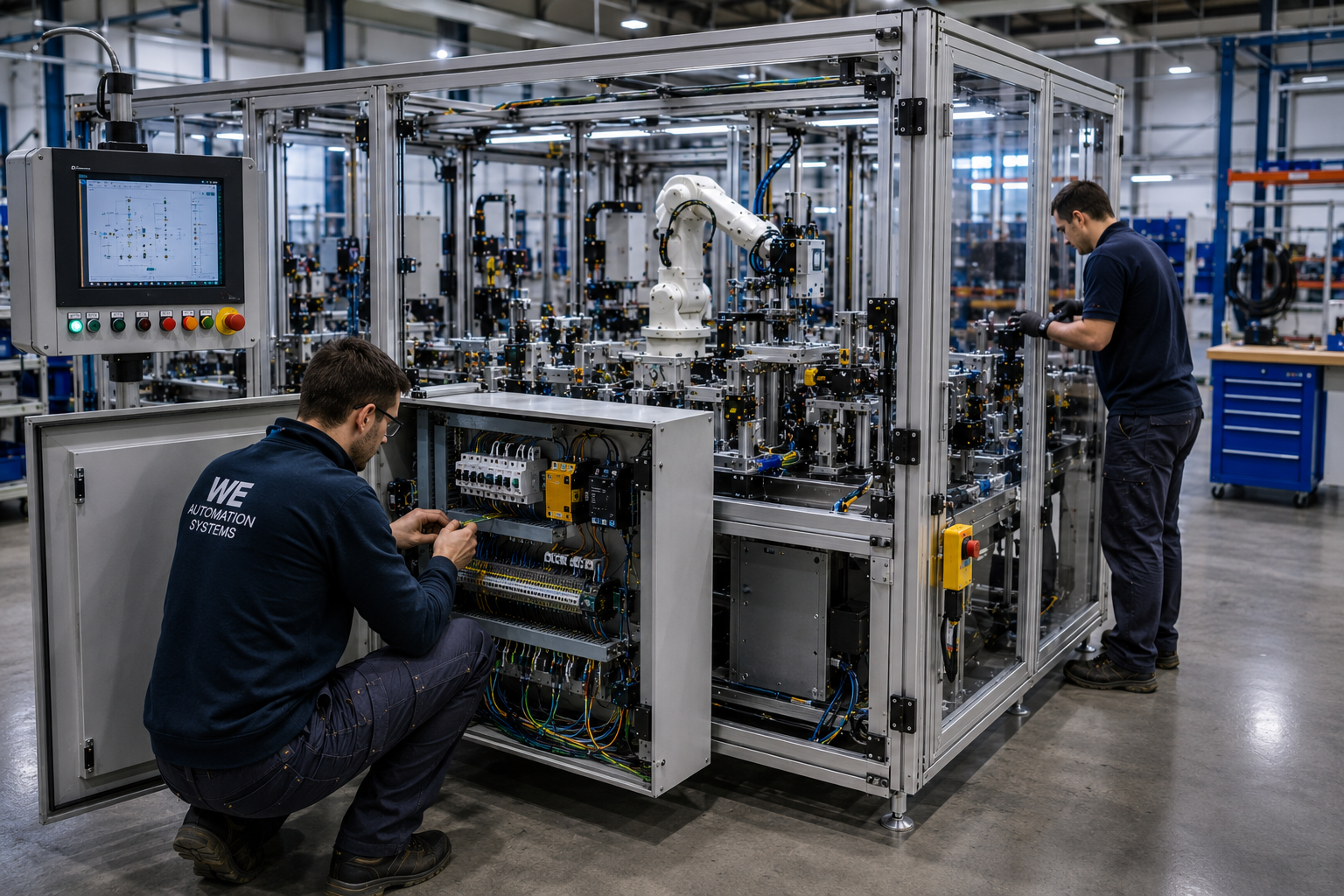
Custom automation typically requires several technical disciplines to be developed together so the mechanical, electrical, controls and process functions operate as one coordinated machine or system.
Machine architecture, frames, guarding, access, tooling, fixtures and serviceability.
Control panels, electrical architecture, power distribution, safety circuits and field devices.
PLC, HMI, sequencing, industrial communications, motion logic and machine interfaces.
Robot integration, reach and motion requirements, end-of-arm tooling and coordinated machine movement.
Machine vision, sensors, inspection functions and application-specific process verification.
Coordination of machinery, controls, subsystems and production interfaces within the complete equipment architecture.
Design decisions consider assembly, access, operator interaction, maintenance, machine interfaces and the practical requirements of installation and production use.
Drawings, specifications, control information and agreed project documentation are exchanged as required during the relevant technical and commercial stages of the project.
Start a technical discussion